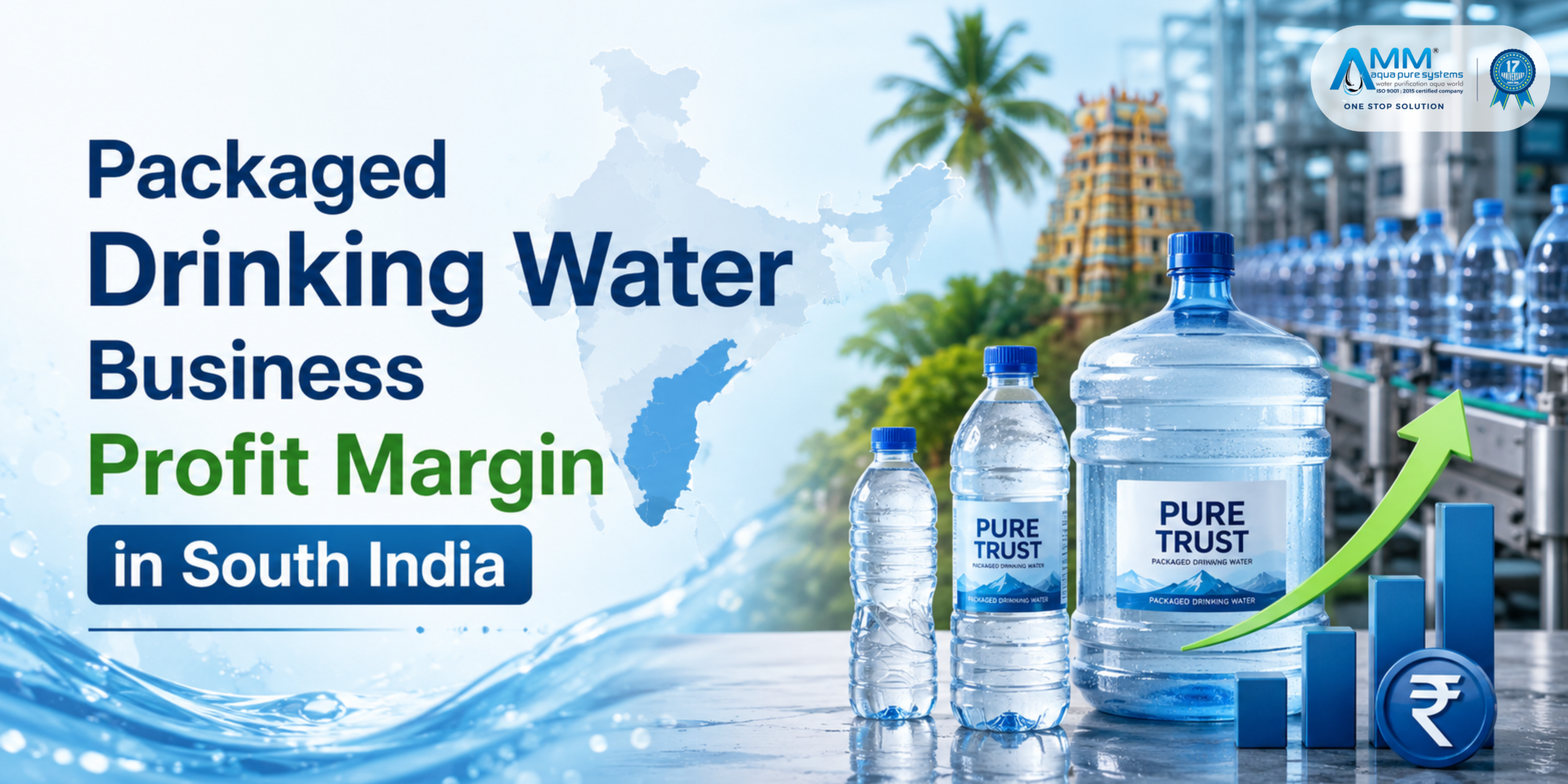
The demand for safe and hygienic drinking water continues to rise across South India, creating significant opportunities for entrepreneurs looking to enter the water manufacturing sector. With increasing urbanization, growing health awareness, and expanding commercial establishments, the packaged drinking water business profit margin in South India has become an attractive topic for investors and business owners alike.
Whether supplying households, offices, hotels, restaurants, educational institutions, or industrial facilities, packaged drinking water remains a necessity-driven product with consistent market demand. However, understanding investment requirements, operating expenses, and profit potential is essential before launching a water manufacturing venture.
This guide explores the profitability, costs, challenges, and growth opportunities associated with starting a packaged drinking water business in South India.
What Is the Average Profit Margin?
The average packaged drinking water business profit margin in South India typically ranges between 20% and 40%, depending on plant capacity, production efficiency, operating costs, and the strength of the distribution network. Businesses that automate operations, optimize logistics, and maintain high product quality often achieve higher profit margins and faster return on investment.
Packaged Drinking Water Industry’s Growth in South India
South India has witnessed substantial growth in demand for packaged drinking water over the last decade. States such as Tamil Nadu, Karnataka, Kerala, Andhra Pradesh, and Telangana have seen increased consumption due to rapid urban development and changing consumer preferences.
Several factors contribute to this growth:
- Rising concerns about water quality and contamination
- Expansion of hotels, resorts, and tourism businesses
- Growing corporate and IT sectors
- Increased demand from hospitals and educational institutions
- Greater consumer preference for hygienic drinking water
As a result, the packaged drinking water business profit margin in South India continues to attract entrepreneurs seeking scalable and sustainable manufacturing opportunities.
State-wise Demand for Packaged Drinking Water in South India
Demand for packaged drinking water varies across South Indian states based on urbanization, industrial growth, tourism, and population density. Understanding regional demand helps entrepreneurs choose the right location for establishing a profitable water bottling business.
| State | Major Demand Drivers |
| Tamil Nadu | Manufacturing industries, apartments, IT parks, educational institutions, tourism |
| Karnataka | Bengaluru IT sector, hospitals, commercial complexes, hotels |
| Kerala | Tourism, hospitality, healthcare, residential consumption |
| Andhra Pradesh | Industrial corridors, educational institutions, commercial establishments |
| Telangana | Hyderabad IT companies, pharmaceuticals, corporate offices, infrastructure projects |
With growing urban populations and increasing awareness of safe drinking water, South India continues to provide excellent opportunities for new packaged drinking water manufacturing businesses.
Understanding the Packaged Drinking Water Business Model
A successful water bottling business generates revenue through multiple channels. Diversifying sales helps improve profitability and reduce dependency on a single customer segment. Common revenue streams include:
- 20-litre water cans for homes and offices
- 500 ml bottled water sales
- 1-litre packaged drinking water bottles
- Hotel and restaurant supply contracts
- Corporate bulk supply agreements
- Event and function water supply
- Distribution partnerships
A well-structured bottled water business plan India should identify target markets, distribution networks, production capacity, and pricing strategies before plant installation.
Packaged Drinking Water Plant Cost in India
One of the first questions entrepreneurs ask is: How much investment is required to start a water bottling business?
The packaged drinking water plant cost in India depends on factors such as production capacity, automation level, land availability, and packaging requirements.
Estimated Investment Range
| Plant Type | Estimated Investment |
| Small Scale Plant | ₹10–25 Lakhs |
| Medium Capacity Plant | ₹25–75 Lakhs |
| Fully Automated Plant | ₹75 Lakhs–₹2 Crores+ |
Major investment components include:
i) Land and Infrastructure
A suitable location with reliable water sources and transportation access is critical for long-term profitability.
ii) Water Treatment Equipment
RO systems, filtration units, UV sterilizers, ozonation systems, and storage tanks form the backbone of the purification process.
iii) Bottling and Packaging Machinery
The automatic water bottling plant cost is generally higher but offers improved production efficiency and reduced labour dependency.
iv) Licensing and Certification
Obtaining approvals and implementing a BIS certified water plant setup is mandatory for legal operation and market credibility.
v) Working Capital
Entrepreneurs should also account for packaging materials, salaries, electricity, transportation, and inventory management during the initial stages.
Understanding the water bottle business investment cost helps investors plan budgets accurately and avoid financial constraints after commissioning.
What Licenses Are Required to Start a Packaged Drinking Water Business?
Before commencing operations, every packaged drinking water manufacturing unit must obtain the necessary approvals to ensure legal compliance and maintain product quality.
The essential licenses include:
- BIS Certification (IS 14543) for packaged drinking water
- FSSAI License
- GST Registration
- Factory License
- Trade License from the local authority
- Pollution Control Board Consent (where applicable)
- Groundwater extraction permission (if required)
Obtaining these certifications not only ensures regulatory compliance but also builds customer confidence and improves business credibility.
Packaged Drinking Water Manufacturing Cost Breakdown
The profitability of a water bottling business largely depends on controlling the packaged drinking water manufacturing cost.
Typical monthly expenses include:
| Expense Category | Cost Impact |
| Raw Water Processing | Moderate |
| Electricity Consumption | High |
| Labour Salaries | Moderate |
| Packaging Materials | High |
| Transportation & Distribution | High |
| Equipment Maintenance | Moderate |
| Marketing & Branding | Variable |
Electricity often becomes one of the largest operational expenses, especially for high-capacity RO systems and automated production lines.
Regular preventive maintenance can significantly reduce downtime and improve the overall RO water plant business profit.
Packaged Drinking Water Business Profit Margin in South India
One of the most important considerations for investors is understanding the actual packaged drinking water business profit margin in South India. Although profitability varies based on production scale and market reach, most successful businesses operate within healthy margin ranges.
Example Profit Calculation
Assume a plant produces 5,000 litres per day.
Monthly production:
150,000 litres
If a significant portion of production is sold through 20-litre water cans:
- Selling price per can: ₹30–₹50
- Production and delivery cost per can: ₹10–₹20
This creates an estimated 20 litre water can business profit of ₹15–₹25 per can depending on location and operational efficiency.
Sample Monthly Revenue Estimate
| Particulars | Amount |
| Monthly Revenue | ₹7,50,000 |
| Operating Expenses | ₹4,50,000 |
| Net Profit | ₹3,00,000 |
In many cases, the mineral water business profit margin ranges between 20% and 40%. Businesses with strong distribution networks and efficient production processes can often achieve higher profitability.
When conducting a water bottling plant profit calculation, factors such as transportation costs, packaging expenses, and market pricing must be considered carefully.
How Long Does It Take to Recover the Investment?
One of the most common questions entrepreneurs ask is how quickly they can recover their investment. While the exact timeline depends on production capacity, sales volume, and operating efficiency, a well-managed packaged drinking water plant can typically achieve a return on investment within 2 to 4 years.
Estimated ROI Timeline
| Plant Size | Expected ROI |
| Small Plant | 2–3 Years |
| Medium Plant | 18–30 Months |
| Large Automated Plant | 2–4 Years |
Faster ROI can be achieved through efficient operations, recurring commercial customers, and a strong dealer network.
Small Scale vs Large Scale Water Plants
The profitability of a small-scale packaged drinking water business differs significantly from larger automated operations.
| Factor | Small Scale Plant | Large Scale Plant |
| Initial Investment | Lower | Higher |
| Production Capacity | Limited | High |
| Labour Requirement | More | Less |
| Automation Level | Basic | Advanced |
| Profit Potential | Moderate | High |
| Market Reach | Local | Regional |
Small plants are suitable for local distribution, while larger facilities can supply multiple cities and institutional clients.
Choosing the right drinking water plant setup cost depends on market demand, business goals, and available capital.
Factors Affecting Profitability
Several variables directly influence the packaged drinking water business profit margin in South India.
-
Production Efficiency
Well-designed systems minimize wastage and maximize output.
-
Distribution Network
A strong dealer and distributor network helps increase sales volume and market coverage.
-
Packaging Quality
Attractive and durable packaging enhances brand value and customer trust.
-
Location
Plants located near target markets can significantly reduce transportation costs.
-
Automation
Investing in automated filling and packaging systems improves consistency and reduces operating expenses.
-
Water Quality Compliance
Maintaining a BIS certified water plant setup improves customer confidence and enables access to institutional contracts.
Break-even Analysis for a Packaged Drinking Water Plant
A break-even analysis helps entrepreneurs understand how much production and sales are required to recover fixed operating costs.
The break-even point depends on factors such as:
- Daily production capacity
- Selling price per bottle or water can
- Raw material costs
- Electricity consumption
- Labour expenses
- Transportation and distribution costs
Businesses that consistently operate at higher production volumes and maintain efficient distribution networks generally achieve break-even faster while improving long-term profitability.
How to Increase Profit Margins
Entrepreneurs can improve profitability through several practical strategies:
i) Focus on Recurring Customers
Residential apartments, offices, hotels, and educational institutions provide consistent demand.
ii) Optimize Energy Usage
Energy-efficient equipment can reduce monthly operating costs.
iii) Strengthen Distribution Channels
Expanding dealer networks increases sales without substantial marketing expenditure.
iv) Invest in Automation
Although the automatic water bottling plant cost is higher initially, automation improves long-term operational efficiency.
v) Prioritize Preventive Maintenance
Regular servicing reduces equipment failures and production interruptions.
Common Mistakes New Entrepreneurs Should Avoid
Many startups face profitability challenges due to avoidable mistakes.
Common issues include:
- Underestimating the packaged drinking water plant cost in India
- Ignoring working capital requirements
- Delaying BIS certification approvals
- Choosing low-quality equipment
- Poor route and distribution planning
- Weak branding and marketing efforts
Proper planning helps businesses achieve sustainable growth and better returns on investment.
Why Choose AMM Aqua Pure Systems for Your Packaged Drinking Water Plant?
Setting up a profitable packaged drinking water business requires more than purchasing machinery. It requires expert planning, quality equipment, regulatory compliance, and long-term technical support. AMM Aqua Pure Systems delivers complete turnkey solutions that help entrepreneurs establish successful water manufacturing plants across South India and India.
Why Entrepreneurs Choose AMM Aqua
- 17+ Years of Industry Experience
- Complete Turnkey Water Plant Solutions
- BIS Certification Assistance
- Customized Plant Design & Layout
- Advanced RO Water Treatment Systems
- Fully Automatic Bottling & Packaging Machines
- Installation, Training & Commissioning
- Annual Maintenance & Technical Support
- PAN India Service Network
- High-Quality Components for Long-Term Performance
Whether you’re planning a small-scale water bottling unit or a fully automated packaged drinking water manufacturing facility, our experts help you build a reliable and profitable business.
Ready to Start Your Packaged Drinking Water Business?
Planning to establish a packaged drinking water manufacturing plant in South India? AMM Aqua Pure Systems offers complete end-to-end solutions, from project planning and plant design to equipment installation, BIS certification guidance, and after-sales support.
Contact our experts today for a free consultation, customized project recommendations, and a detailed investment estimate tailored to your business goals.
Conclusion
The packaged drinking water industry continues to offer strong business opportunities across South India. Growing consumer demand, increasing commercial consumption, and rising awareness about water quality create a stable foundation for long-term growth.
While the packaged drinking water business profit margin in South India typically ranges between 20% and 40%, actual profitability depends on factors such as production capacity, distribution efficiency, operating costs, and brand positioning.
By investing in quality equipment, maintaining BIS compliance, and adopting efficient operational practices, entrepreneurs can build a scalable and profitable water manufacturing business.
Looking for trusted water treatment plant suppliers? AMM Aqua Pure Systems delivers complete solutions to help you launch and grow your water business.
Key Takeaways
- The packaged drinking water business in South India offers strong growth potential due to rising demand from households, businesses, and institutions.
- Profit margins typically range between 20% and 40%, depending on production efficiency, distribution networks, and operating costs.
- Careful planning of plant setup costs, certification requirements, and operational expenses is essential for long-term profitability.
- Investing in quality equipment and partnering with experienced water treatment plant suppliers can improve productivity, compliance, and business success.
Frequently Asked Questions
- What is the average packaged drinking water business profit margin in South India?
Most businesses achieve net profit margins ranging from 20% to 40%, depending on production capacity and operational efficiency. - What is the packaged drinking water plant cost in India?
A small plant may require ₹10–25 lakhs, while large automated plants can cost ₹75 lakhs to ₹2 crores or more. - Is the 20-litre water business profitable?
Yes. The 20 litre water can business profit can range from ₹15–₹25 per can depending on market conditions and delivery costs. - Is BIS certification mandatory for packaged drinking water plants?
Yes. A BIS certified water plant setup is essential for legal operation and customer trust. - How long does it take to recover the investment?
Most well-managed plants can achieve ROI within 2–4 years depending on production volume and market reach.