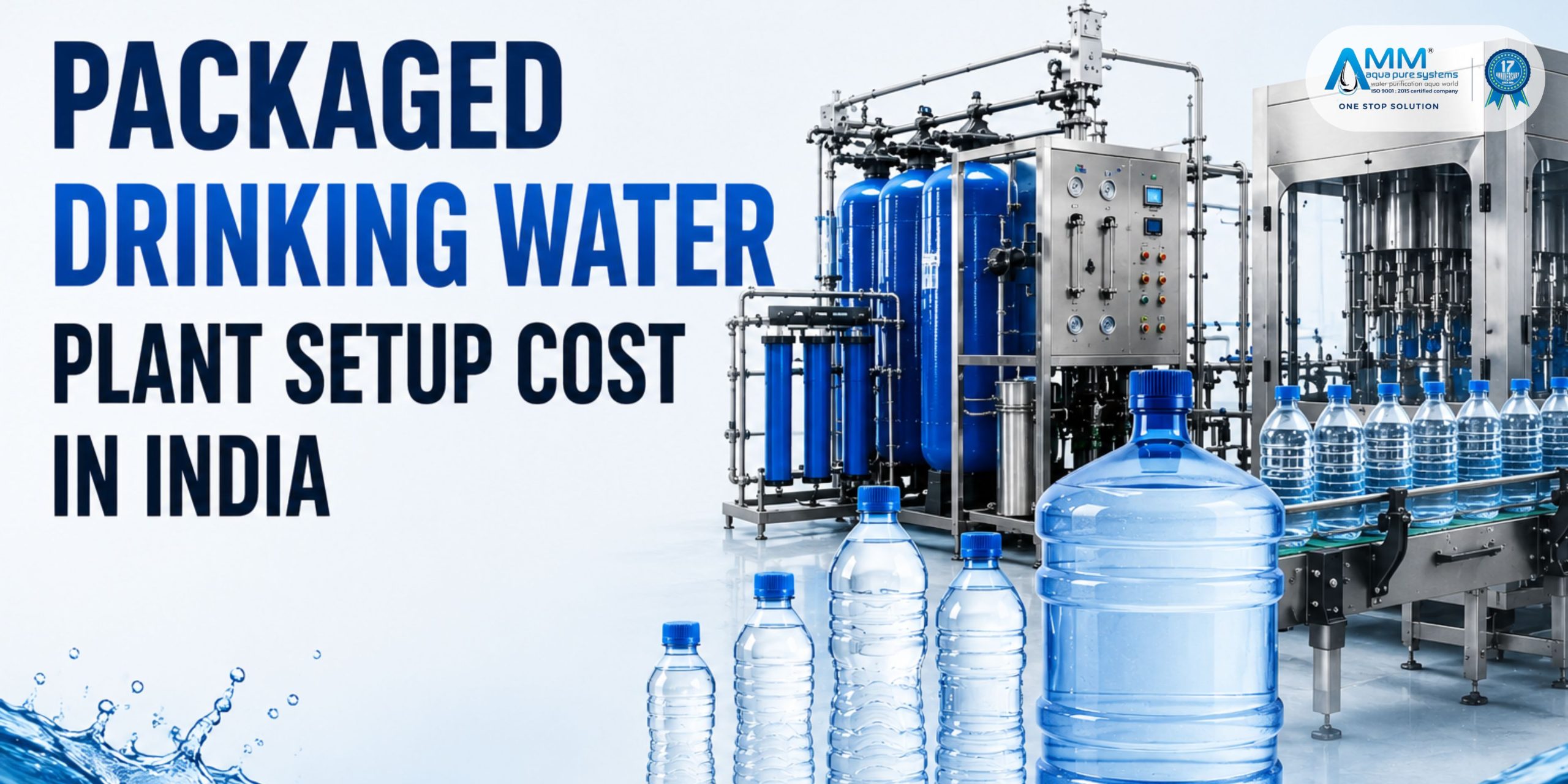
The demand for safe and hygienically packaged drinking water continues to create business opportunities across India. Increasing urbanisation, growing awareness of water quality, and demand from households, offices, hotels, hospitals, institutions, retailers, and commercial establishments are driving interest in packaged drinking water businesses.
One of the first questions entrepreneurs ask before starting a water bottling business is:
What is the packaged drinking water plant setup cost in India?
The total investment depends on several factors, including plant capacity, raw water quality, treatment technology, automation level, bottling requirements, infrastructure, packaging format, installation, applicable compliance requirements, and working capital.
This guide explains the major investment components, machinery requirements, capacity-wise cost considerations, infrastructure, compliance requirements, operating expenses, setup process, and factors that can influence the overall project budget.
Why Invest in a Packaged Drinking Water Plant?
A well-planned packaged drinking water business can serve multiple customer segments, including households, offices, hotels, hospitals, educational institutions, restaurants, retailers, distributors, and commercial establishments.
Key opportunities include:
- Growing demand for packaged drinking water
- Recurring sales through retail and distribution networks
- Opportunities to serve local and regional markets
- Scalability through higher production capacity
- Multiple packaging formats, including bottles and 20-litre jars
- Potential for long-term business growth with an effective distribution strategy
However, profitability depends on factors such as production utilisation, product pricing, packaging costs, distribution reach, operating expenses, competition, and market demand. A project feasibility assessment should be completed before making a major investment.
What Is a Packaged Drinking Water Plant?
A packaged drinking water plant is a facility designed to treat raw water and prepare it for hygienic packaging and commercial distribution.
Depending on the raw water quality and treatment requirements, a typical water treatment and bottling process may include:
- Raw water collection
- Feed pumping
- Sand filtration
- Activated carbon filtration
- Micron filtration
- Reverse Osmosis (RO)
- UV treatment
- Mineral dosing or blending, where applicable
- Ozonation
- Treated water storage
- Bottle or jar filling
- Capping
- Labelling
- Shrink wrapping and final packaging
The exact treatment configuration should be selected based on raw water analysis, required production capacity, product specifications, and applicable quality requirements.
AMM Aqua provides RO treatment and packaged drinking water solutions across multiple capacities, with its website listing systems from 500 LPH to 25,000+ LPH.
Factors That Affect Packaged Drinking Water Plant Setup Cost
The cost of establishing a packaged drinking water plant is not determined by the RO system alone. Several project-specific factors influence the final investment.
1. Plant Capacity
Production capacity is one of the biggest cost factors.
Common project capacities may include:
- 500 LPH
- 1,000 LPH
- 2,000 LPH
- 5,000 LPH
- 10,000 LPH
- 20,000 LPH and above
Higher-capacity plants generally require larger treatment systems, storage facilities, pumps, electrical systems, and bottling or packaging lines.
AMM Aqua’s website lists multiple water treatment and packaged drinking water plant capacities, including 1,000 LPH, 2,000 LPH, 3,000 LPH, 4,000 LPH, 6,000 LPH, 10,000 LPH, and 25,000 LPH configurations.
2. Automation Level
The level of automation can significantly affect the initial investment.
Businesses may consider:
- Semi-automatic systems
- Automatic systems
- Fully integrated automated production lines
Automation can improve production consistency, reduce manual handling, and support higher production volumes. The right configuration should be selected based on expected demand, labour availability, and budget.
3. Raw Water Quality
Raw water quality directly affects treatment requirements.
Factors such as:
- TDS
- Hardness
- Turbidity
- Microbiological contamination
- Iron
- Other dissolved contaminants
can influence the treatment process and equipment configuration.
A raw water analysis should therefore be conducted before finalising the plant design.
4. Packaging Format
The packaging format also influences the overall project cost.
Common options include:
- 250 ml bottles
- 500 ml bottles
- 1 litre bottles
- 2 litre bottles
- 20 litre jars
Different bottle sizes and packaging formats may require different filling, mould, labelling, capping, washing, or packaging configurations.
5. Location and Infrastructure
Land and infrastructure costs vary significantly by location.
The project budget may need to account for:
- Building construction
- Flooring and drainage
- Electrical connections
- Water pipelines
- Storage areas
- Production rooms
- Laboratory facilities
- Warehouse space
- Transportation access
What Does the Total Plant Investment Include?
When calculating the packaged drinking water plant setup cost in India, investors should consider more than the machinery purchase price.
Machinery and Treatment Equipment
The equipment package may include:
- RO water treatment system
- Sand and carbon filters
- Micron filtration
- UV system
- Ozonation system
- Mineral dosing/blending system, where applicable
- Storage tanks
- Pumps and pipelines
- Bottle blowing machine
- Bottle filling machine
- Capping system
- Labelling machine
- Shrink wrapping machine
- Jar filling and washing equipment, where required
AMM Aqua’s website covers water treatment and bottling equipment including RO systems, PET bottle blowing machines, filling machines, labelling machines, shrink wrapping systems, and jar filling equipment.
Civil Work and Infrastructure
The investment may also include:
- Production area
- Bottling room
- Raw water storage
- Treated water storage
- Finished goods storage
- Laboratory
- Utility areas
- Warehouse
- Hygiene-related infrastructure
Electrical and Utility Setup
Depending on the plant configuration, this can include:
- Electrical panels
- Wiring
- Pumps
- Air compressors
- Control systems
- Power distribution
- Backup power systems
- Utility pipelines
Compliance and Quality Testing
The project budget should also account for applicable licensing, testing, documentation, and compliance-related expenses.
Packaging Materials
Initial working capital may be required for:
- PET preforms
- Caps
- Labels
- Shrink film
- Cartons
- Cleaning and treatment consumables
- Other packaging materials
Working Capital
Working capital is important during the initial operating period and may cover:
- Labour
- Electricity
- Water and utilities
- Packaging materials
- Transportation
- Distribution
- Maintenance
- Marketing
- Other operating expenses
Packaged Drinking Water Plant Cost in India by Capacity
The following figures are indicative project-level estimates only. Actual investment can vary significantly based on equipment configuration, automation, packaging line, raw water quality, civil work, location, installation, utilities, and working capital requirements.
| Plant Capacity | Indicative Total Investment |
| 500 LPH | ₹15–25 Lakhs |
| 1,000 LPH | ₹25–40 Lakhs |
| 2,000 LPH | ₹40–75 Lakhs |
| 5,000 LPH | ₹75 Lakhs–₹1.5 Crore |
| 10,000 LPH+ | ₹1.5–3 Crore+ |
Cost Disclaimer
The investment figures provided above are indicative estimates for general planning purposes and are not fixed quotations. Actual project costs may vary based on plant capacity, raw water quality, treatment configuration, automation, packaging line, site conditions, installation, utilities, applicable approvals, and working capital requirements. Contact AMM Aqua for a project-specific cost estimate.
Which Capacity Is Suitable for Your Business?
The right capacity depends on your expected sales volume, target market, available investment, packaging format, and future expansion plans.
- 500 LPH: Suitable for small-scale or local-market projects
- 1,000 LPH: Suitable for businesses planning moderate production
- 2,000 LPH: Suitable for growing regional operations
- 5,000 LPH: Suitable for larger commercial production
- 10,000 LPH and above: Suitable for high-volume operations and large distribution networks
A feasibility assessment can help determine the most suitable capacity before purchasing equipment.
Machinery Required for a Packaged Drinking Water Plant
RO Water Treatment Plant
The RO system is a key part of the purification process. It helps reduce dissolved salts and other impurities from feed water before downstream treatment and packaging.
The exact RO configuration should be designed according to raw water analysis and required production capacity.
PET Bottle Blowing Machine
PET bottle blowing machines convert PET preforms into finished bottles.
AMM Aqua provides PET bottle blowing machine solutions in different cavity configurations.
PET Bottle Water Filling Machine
Automatic filling systems can integrate rinsing, filling, and capping operations for efficient bottle production.
The appropriate filling capacity should be selected according to the required production volume and packaging format.
Labelling Machine
Labelling machines apply product labels consistently and efficiently to packaged bottles or containers.
Shrink Wrapping Machine
Shrink wrapping systems help group and secure bottles for handling, storage, and transportation.
Jar Filling and Washing Machines
For businesses producing 20-litre packaged drinking water jars, jar washing and filling systems can improve hygiene, consistency, and production efficiency.
AMM Aqua offers jar filling and washing solutions for 20-litre water cans.
Estimated Machinery Cost Breakdown
Machinery costs can vary significantly based on capacity, automation, specifications, and configuration.
| Machinery | Indicative Cost Range |
| RO Water Treatment Plant | ₹5–40 Lakhs |
| PET Bottle Blowing Machine | ₹5–25 Lakhs |
| Bottle Filling Machine | ₹8–50 Lakhs |
| Labelling Machine | ₹3–15 Lakhs |
| Shrink Wrapping Machine | ₹2–12 Lakhs |
| Storage Tanks | ₹1–10 Lakhs |
| Laboratory Setup | ₹3–15 Lakhs |
These figures are indicative ranges and should not be treated as fixed market prices or AMM Aqua quotations. A detailed quotation should be prepared based on the required capacity, site conditions, raw water quality, and equipment configuration.
Hidden and Additional Costs to Consider
Investors should also plan for expenses that may not appear in the initial machinery quotation.
Transportation and Installation
Potential costs include:
- Machinery transportation
- Unloading
- Installation
- Commissioning
- Site modifications
- Utility connections
- Trial production
Power and Utility Requirements
Additional investment may be required for:
- Generator or backup power
- Electrical upgrades
- Voltage protection
- Additional water storage
- Pumps and utility equipment
Workforce and Training
The business may need to budget for:
- Recruitment
- Operator training
- Technical training
- Initial staffing
- Safety and quality procedures
Marketing and Distribution
Launching a packaged drinking water brand may require investment in:
- Brand development
- Packaging design
- Marketing
- Distributor onboarding
- Retailer development
- Product sampling
- Transportation and delivery
Planning these expenses in advance provides a more realistic view of the total investment.
Land and Infrastructure Requirements
The space required depends on the plant capacity, treatment configuration, bottling line, packaging format, storage requirements, and site layout.
The facility may require dedicated areas for:
- Raw water storage
- Water treatment
- Bottling
- Packaging
- Finished goods
- Laboratory
- Utility systems
- Maintenance
- Administration
Instead of choosing a fixed land area before equipment selection, it is better to prepare the plant layout according to the proposed machinery and production capacity.
AMM Aqua’s website indicates that space requirements vary by plant capacity and provides project-specific guidance for plant setup.
For larger projects, additional space may be required for production lines, warehouses, vehicle movement, utilities, and future expansion.
Licences, Approvals and 2026 Compliance Requirements
Regulatory requirements should be verified before commercial production because applicable approvals can depend on the business model, location, water source, plant configuration, and current regulations.
FSSAI Requirements
Packaged drinking water businesses must comply with applicable FSSAI licensing and food safety requirements.
FSSAI has also issued a Scheme of Testing for Packaged Drinking Water and Mineral Water, effective from January 1, 2026, outlining applicable testing requirements.
Businesses should verify the latest FSSAI requirements applicable to their specific operation before commencing commercial production.
BIS and IS 14543
The regulatory position regarding BIS certification has changed.
The current BIS compulsory-certification page lists IS 14543 – Packaged Drinking Water (Other than Packaged Natural Mineral Water) as de-notified from compulsory BIS certification. Therefore, this article does not treat BIS certification as universally mandatory for packaged drinking water.
Businesses should verify the latest applicable standards and regulatory requirements before starting production.
Other Approvals
Depending on the project, businesses may also need to consider:
- GST registration, where applicable
- Factory-related approvals, where applicable
- Local trade or business licences
- Pollution Control Board consent, where applicable
- Groundwater extraction permissions, where applicable
- Local building, fire, electrical, or other statutory approvals, where applicable
Because regulatory requirements can vary by location and project type, entrepreneurs should obtain project-specific professional guidance before starting the approval process.
Operating Costs of a Packaged Drinking Water Plant
Setting up the plant is only the initial investment. Businesses should also plan for recurring operating costs.
Major operating expenses may include:
- Electricity
- Labour
- Packaging materials
- Water treatment consumables
- Membrane and filter replacement
- Equipment maintenance
- Transportation
- Distribution
- Marketing
- Warehouse expenses
- Administrative costs
Controlling these expenses while maintaining consistent product quality is important for long-term profitability.
ROI and Payback Period
The profitability of a packaged drinking water business varies significantly from one project to another.
Important factors include:
- Production capacity
- Actual production utilisation
- Selling price
- Packaging cost
- Electricity consumption
- Labour cost
- Distribution network
- Dealer and retailer margins
- Transportation expenses
- Market competition
- Brand demand
For this reason, a fixed ROI or payback period should not be assumed for every water plant.
A project-specific feasibility assessment can help estimate expected revenue, operating expenses, cash flow, and potential payback based on the proposed plant configuration and target market.
How to Start a Packaged Drinking Water Plant: Step-by-Step
Step 1: Conduct Market Research
Identify:
- Target customers
- Local demand
- Competitors
- Existing brands
- Distribution opportunities
- Suitable bottle or jar formats
Step 2: Analyze the Raw Water
Conduct a detailed raw water analysis to understand treatment requirements and select suitable purification technology.
Step 3: Select the Plant Capacity
Choose the production capacity based on:
- Expected demand
- Available investment
- Distribution network
- Packaging requirements
- Future expansion plans
Step 4: Prepare the Plant Layout
Plan dedicated areas for:
- Water treatment
- Storage
- Bottling
- Packaging
- Laboratory
- Finished goods
- Utilities
Step 5: Finalise Machinery
Select the RO system, storage tanks, filling line, bottle blowing machine, labelling machine, packaging equipment, and other machinery according to the required production capacity.
Step 6: Complete Applicable Licences and Approvals
Identify and obtain the approvals applicable to your project, location, water source, and business model.
Step 7: Install and Commission the Plant
Complete:
- Machinery installation
- Pipeline connections
- Electrical integration
- Equipment testing
- Trial production
- Commissioning
Step 8: Establish Quality Testing Procedures
Implement appropriate testing, documentation, hygiene, and food safety procedures according to applicable requirements.
Step 9: Build Distribution
Develop:
- Distributor networks
- Retailer relationships
- Institutional customers
- Delivery systems
- Local marketing channels
Step 10: Begin Commercial Production
Once the plant, quality systems, approvals, and distribution network are ready, commercial production can begin according to applicable regulatory requirements.
Why Choose AMM Aqua for Your Water Plant Project?
AMM Aqua provides water treatment and packaged drinking water plant solutions in India, supporting projects from plant design and machinery selection through installation and technical support.
The AMM Aqua website states that the company has 17+ years of industry experience and 350+ installations, along with after-sales technical support.
AMM Aqua’s Turnkey Capabilities
AMM Aqua supports packaged drinking water projects with:
- Raw water analysis and technical consultation
- Plant capacity assessment
- Plant layout and system design
- RO water treatment systems
- PET bottle blowing machines
- PET bottle filling machines
- Labelling machines
- Shrink wrapping systems
- Automatic jar filling machines
- Jar washing machines
- Installation and commissioning
- Operator training
- Technical and after-sales support
AMM Aqua’s website presents its project approach around requirement analysis, plant design, engineering, manufacturing, installation, commissioning, training, and technical support.
Get a Customized Packaged Drinking Water Plant Cost Estimate
Planning to start a packaged drinking water business?
The right plant configuration depends on your required capacity, raw water quality, bottle or jar format, automation level, location, budget, and future expansion plans.
Contact AMM Aqua for a customized plant cost estimate and discuss your project requirements with water treatment experts.
Final Words
The packaged drinking water plant setup cost in India can range from tens of lakhs for smaller projects to several crores for larger and highly automated commercial facilities.
However, the final investment depends on much more than plant capacity. Machinery, raw water quality, automation, packaging format, civil work, utilities, installation, applicable compliance requirements, working capital, and distribution requirements can all affect the project budget.
Before investing, entrepreneurs should conduct raw water analysis, determine the appropriate production capacity, prepare a project feasibility assessment, understand applicable approvals, and select machinery based on their actual production requirements.
Working with an experienced turnkey water treatment and bottling solution provider can simplify plant design, machinery selection, installation, commissioning, and technical support.
Frequently Asked Questions
1. What is the packaged drinking water plant setup cost in India?
The indicative investment can range from around ₹15 lakhs for smaller projects to ₹3 crores or more for larger and highly automated plants. Actual costs depend on capacity, machinery configuration, infrastructure, packaging requirements, location, installation, and working capital.
2. What machinery is required for a packaged drinking water plant?
Typical equipment includes an RO water treatment system, filtration systems, storage tanks, filling and capping equipment, PET bottle blowing machines, labelling machines, shrink wrapping systems, and jar washing and filling equipment where required.
3. Is BIS certification mandatory for packaged drinking water?
The current BIS compulsory-certification page lists IS 14543 for Packaged Drinking Water as de-notified from compulsory BIS certification. Businesses should follow applicable FSSAI requirements and current quality and testing requirements and verify the latest regulations before starting production.
4. Is an FSSAI licence required for packaged drinking water?
Packaged drinking water businesses must comply with applicable FSSAI licensing and food safety requirements. Businesses should confirm the licence category and requirements applicable to their specific operation before commercial production. FSSAI’s current licensing regulations are published through its official regulatory framework.
5. How much land is required for a water bottling plant?
The space requirement depends on plant capacity, machinery configuration, packaging line, storage requirements, and site layout. AMM Aqua provides project-specific guidance based on the proposed plant configuration and capacity.
6. What is the average ROI for a water bottling business?
There is no fixed ROI or payback period applicable to every project. Profitability depends on production utilisation, selling price, operating costs, packaging expenses, distribution reach, market demand, and competition. A project-specific feasibility assessment can provide a more realistic estimate.
7. Can I start with a semi-automatic plant?
Yes. A semi-automatic configuration can be considered for businesses with lower initial production requirements. The appropriate automation level should be selected based on expected demand, labour availability, budget, and future expansion plans.
8. What factors affect the water bottling plant cost?
Major factors include plant capacity, raw water quality, treatment technology, automation, machinery selection, packaging format, civil infrastructure, utilities, installation, compliance requirements, and working capital.
9. How long does it take to establish a packaged drinking water plant?
The project timeline depends on site readiness, machinery selection, manufacturing, delivery, installation, commissioning, testing, and applicable approvals. A project-specific timeline should be provided after evaluating the project scope and site conditions.
10. Does AMM Aqua provide turnkey water plant solutions?
Yes. AMM Aqua provides water treatment and packaged drinking water solutions covering project planning, plant design, machinery supply, installation, commissioning, training, and technical support