Starting a packaged drinking water business is not simply about purchasing an RO plant and filling bottles. Many new entrepreneurs overspend or struggle because they choose plant capacity without studying demand, underestimate operating expenses, skip raw-water testing, delay compliance planning, or select machinery based only on price..
For entrepreneurs exploring packaged drinking water business in India, the right approach is to make these decisions before investing in machinery. Here are the top 10 mistakes to avoid when planning a packaged drinking water plant.
1. Choosing the Wrong Plant Capacity
Problem: Buying a plant that is too large can leave expensive equipment underutilized, while an undersized system can restrict future sales.
Why it happens: Entrepreneurs often select capacity based on machinery prices or optimistic sales projections instead of actual market demand.
Business impact: Excess capacity increases capital and operating costs. Insufficient capacity can create production bottlenecks and make expansion expensive.
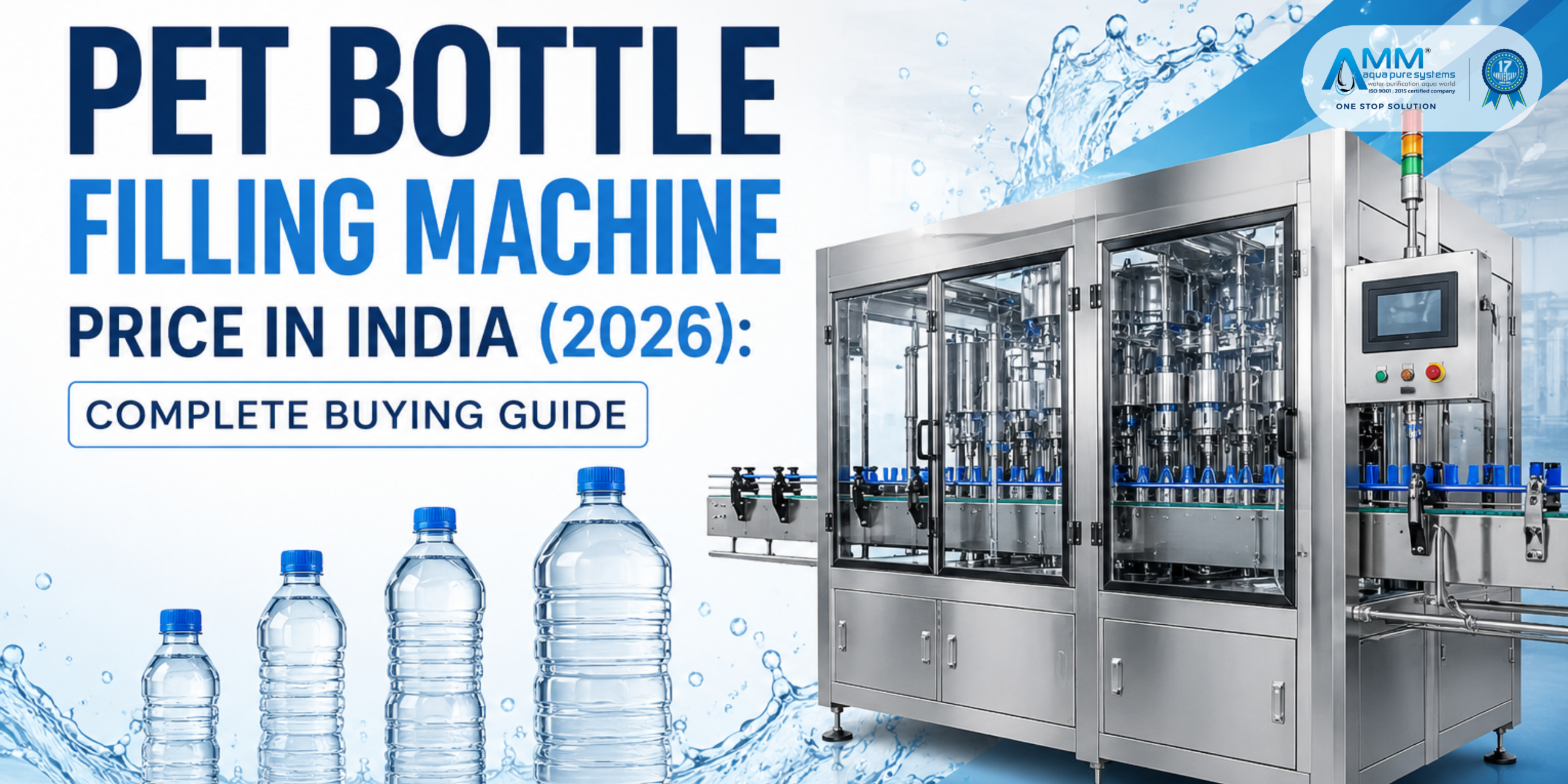
What to do instead: Estimate daily demand, operating hours, product formats and expected growth before finalizing capacity. AMM Aqua offers RO systems ranging from 250 LPH to 50,000 LPH, along with automatic PET bottle filling machinery from 20 to 200 BPM, allowing plant configurations to be matched to different production requirements.
2. Underestimating Packaged Drinking Water Plant Cost
Problem: Entrepreneurs frequently consider only the RO system or filling machine when estimating investment.
Why it happens: A complete project includes much more than the core treatment equipment.
Business impact: Unplanned expenses for storage tanks, pre-treatment, filling, packaging, electrical work, installation, testing, labour and working capital can strain cash flow.
What to do instead: Calculate the complete packaged drinking water plant cost before ordering machinery. Include treatment, filling, washing, storage, packaging, utilities, installation, maintenance and initial working capital. Avoid choosing a machine simply because it has the lowest purchase price.
3. Skipping Proper Raw-Water Testing
Problem: Installing an RO system without understanding the raw-water characteristics can result in an unsuitable treatment configuration.
Why it happens: Some buyers assume that every packaged water plant requires the same treatment stages.
Business impact: Incorrect pre-treatment can affect membrane performance, operating costs, maintenance requirements and finished-water consistency.
What to do instead: Test the proposed water source before designing the RO plant for packaged drinking water. The treatment process may involve combinations of sand and carbon filtration, micron filtration, RO, UV, ozonation and other stages depending on the source and required water quality. AMM Aqua lists these treatment components as part of its water-processing solutions.
4. Ignoring BIS and FSSAI Requirements
Problem: Treating regulatory compliance as something to address after the plant is installed can create delays and costly modifications.
Why it happens: New entrepreneurs often focus on machinery and production while overlooking product standards, testing, documentation, packaging and licensing requirements.
Business impact: Non-compliance can affect the ability to legally manufacture and market the product and may create reputational and financial risks.
What to do instead: Verify the applicable BIS certification for packaged drinking water, FSSAI requirements and current standards before finalizing plant design. BIS currently references IS 14543:2024 for packaged drinking water other than packaged natural mineral water.
FSSAI regulations also specify treatment, packaging and quality requirements for packaged drinking water.
5. Buying Machinery Before Designing the Treatment Process
Problem: Purchasing individual machines first and attempting to connect them later can result in incompatible capacities and inefficient plant layouts.
Why it happens: Online machinery comparisons often make individual equipment prices appear more important than complete process design.
Business impact: Capacity mismatches, production bottlenecks, additional installation work and difficult future expansion can increase the overall packaged drinking water plant setup cost.
What to do instead: Design the complete process first—from raw-water intake and pre-treatment to RO, post-treatment, storage, filling, washing, capping and packaging. AMM Aqua provides customized plant designs and offers integrated treatment and bottling equipment.
6. Choosing Automation Without Considering Business Scale
Problem: Fully automatic machinery is not automatically the best choice for every startup.
Why it happens: Automation is often associated with higher production and lower labour dependency, encouraging entrepreneurs to over-invest at the beginning.
Business impact: Excess automation can increase initial capital requirements when market demand is still developing.
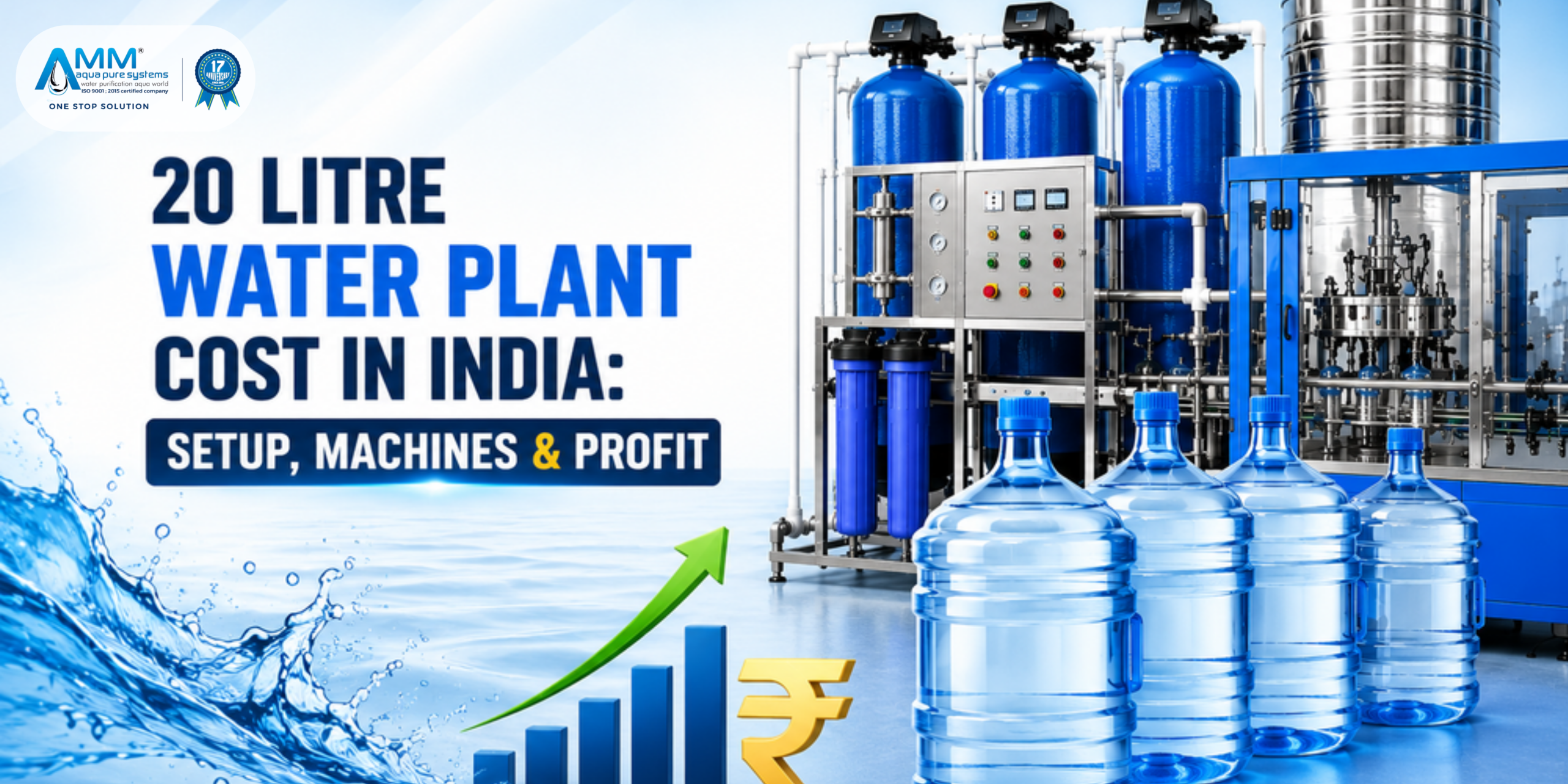
What to do instead: Choose equipment according to production volume, available labour, budget and growth plans. For a 20 litre water jar business, AMM Aqua offers semi-automatic inner and outer brush washing systems as well as automatic washing, filling and capping machinery with published capacities of approximately 200–600 BPH.
7. Underestimating Quality Control and Hygiene
Problem: Treating water quality as only an RO issue can create gaps in the overall production process.
Why it happens: Entrepreneurs may concentrate on purification while overlooking storage, container washing, filling-area hygiene and testing.
Business impact: Inconsistent quality can damage customer trust and expose the business to regulatory and operational risks.
What to do instead: Build quality controls across the entire process. This includes raw-water testing, filtration, disinfection, hygienic storage, container washing, filling and finished-water testing. AMM Aqua’s offerings include UV and micron filtration, ozonation, SS storage tanks and laboratory-related solutions.
8. Ignoring Maintenance and Spare-Part Planning
Problem: A water bottling plant can lose production time when essential components require servicing or replacement.
Why it happens: New businesses often calculate the purchase price but not the long-term maintenance requirements.
Business impact: Unexpected downtime can disrupt deliveries, increase repair expenses and affect customer relationships.
What to do instead: Ask suppliers about preventive maintenance, membrane replacement, filters, pumps, electrical components, servicing and spare availability before purchasing drinking water plant machinery. AMM Aqua states that it provides water-treatment equipment sales, services and spares.
9. Starting Production Without Distribution and Working-Capital Planning
Problem: A plant can produce more water than the business can realistically sell and distribute.
Why it happens: Entrepreneurs frequently focus on production capacity before establishing their customer and delivery network.
Business impact: Unsold inventory, packaging expenses, vehicle costs, credit periods and recurring operating expenses can put pressure on working capital.
What to do instead: Define your target territory and customer segments before commissioning the plant. For a bottled water business in India, this may include retailers, offices, hotels, restaurants, institutions and distributors. For a 20-litre model, also plan jar collection, cleaning, replacement and delivery routes.
10. Choosing a Supplier Based Only on Price
Problem: The cheapest quotation may not represent the lowest total project cost.
Why it happens: Buyers often compare equipment prices without comparing engineering, installation, integration, service and future support.
Business impact: Poor integration or limited after-sales support can increase downtime and modification costs.
What to do instead: Evaluate the supplier’s treatment expertise, customization capability, machinery range, installation, commissioning, service, spares and project support. AMM Aqua states that it undertakes turnkey water-processing projects from concept to commissioning and offers equipment ranging from RO treatment to filling, jar washing, packaging, storage and conveyors.
Pre-Investment Checklist for a Packaged Drinking Water Plant
Before investing, verify:
- Water & Treatment: Raw-water quality, laboratory testing, required capacity, and RO/treatment configuration.
- Production & Machinery: Bottle/jar formats, filling and washing capacity, and suitable automation level.
- Compliance & Infrastructure: BIS/FSSAI requirements, packaging, labelling, electrical and civil needs.
- Operations & Finance: Labour, operating expenses, maintenance, spares, and working-capital requirements.
- Distribution & Supplier Support: Distribution planning, installation, commissioning, and after-sales supplier support.
How to Start a Packaged Drinking Water Business the Right Way
The correct approach is to begin with water analysis and market planning, then determine production capacity, treatment stages, machinery configuration, compliance requirements and budget. A supplier should be able to connect these decisions rather than simply quote individual machines.
For businesses comparing mineral water plant machinery, it is also important to distinguish packaged drinking water from natural mineral water and ensure the product category, treatment process and regulatory requirements are correctly established.
How AMM Aqua Helps
- Water & Process Assessment: Helps evaluate raw-water quality and determine the appropriate treatment and RO configuration.
- Customized Plant Solutions: Offers RO plants, filtration, UV, ozonation, storage and other treatment systems across different capacities.
- Complete Bottling Equipment: Provides bottle filling, PET blowing, 20-litre jar washing/filling, conveyors and packaging machinery.
- Turnkey Project Support: Supports projects from concept to commissioning, helping integrate treatment and production equipment.
- Technical & After-Sales Support: Provides machinery selection, installation, servicing and spares to support long-term plant operations.
Plan Your Plant Before You Purchase the Machinery
The biggest mistake in starting a packaged drinking water business is treating the project as a machinery purchase rather than a complete production system. Capacity, water quality, compliance, treatment, filling, packaging, maintenance and distribution must be planned together.
AMM Aqua Pure Systems provides RO plants, bottle filling systems, 20-litre jar washing and filling machinery, storage tanks, filtration, ozonation, packaging equipment and turnkey water-processing project support. Its published RO range extends from 250 LPH to 50,000 LPH, while its PET filling and 20-litre jar systems cover multiple production requirements.
Ready to build your packaged drinking water plant? Get the right system and machinery, request your AMM Aqua project quotation today.
Frequently Asked Questions
1) What is the first step in starting a packaged drinking water business?
Start by assessing the market, identifying the raw-water source, conducting water testing and determining the required daily production capacity. These factors should guide the plant design.
2) What machinery is required for a packaged drinking water plant?
Depending on the business model, equipment may include pre-filtration, RO, UV, micron filtration, ozonation, storage tanks, bottle or jar washing, filling and capping, conveyors, labelling and packaging systems. AMM Aqua offers these equipment categories as part of its water-processing solutions.
3) Should I choose a semi-automatic or fully automatic plant?
The choice depends on production volume, labour availability, investment capacity and growth plans. Semi-automatic equipment can suit smaller operations, while automation becomes more valuable as production and process requirements increase.
4) What affects packaged drinking water plant cost?
Capacity, water-treatment requirements, automation level, filling technology, packaging equipment, storage, civil and electrical infrastructure, installation and working capital can all influence the overall investment.
5) Is RO always required for packaged drinking water?
The treatment process depends on the source water and applicable quality requirements. Raw-water analysis should therefore be completed before selecting the RO and pre-treatment configuration.