The packaged drinking water industry in India continues to grow rapidly, driven by increasing health awareness, urbanization, tourism, commercial development, and rising demand for safe drinking water. Across South India, entrepreneurs are actively exploring opportunities in the bottled water sector due to its consistent demand and scalable business potential.
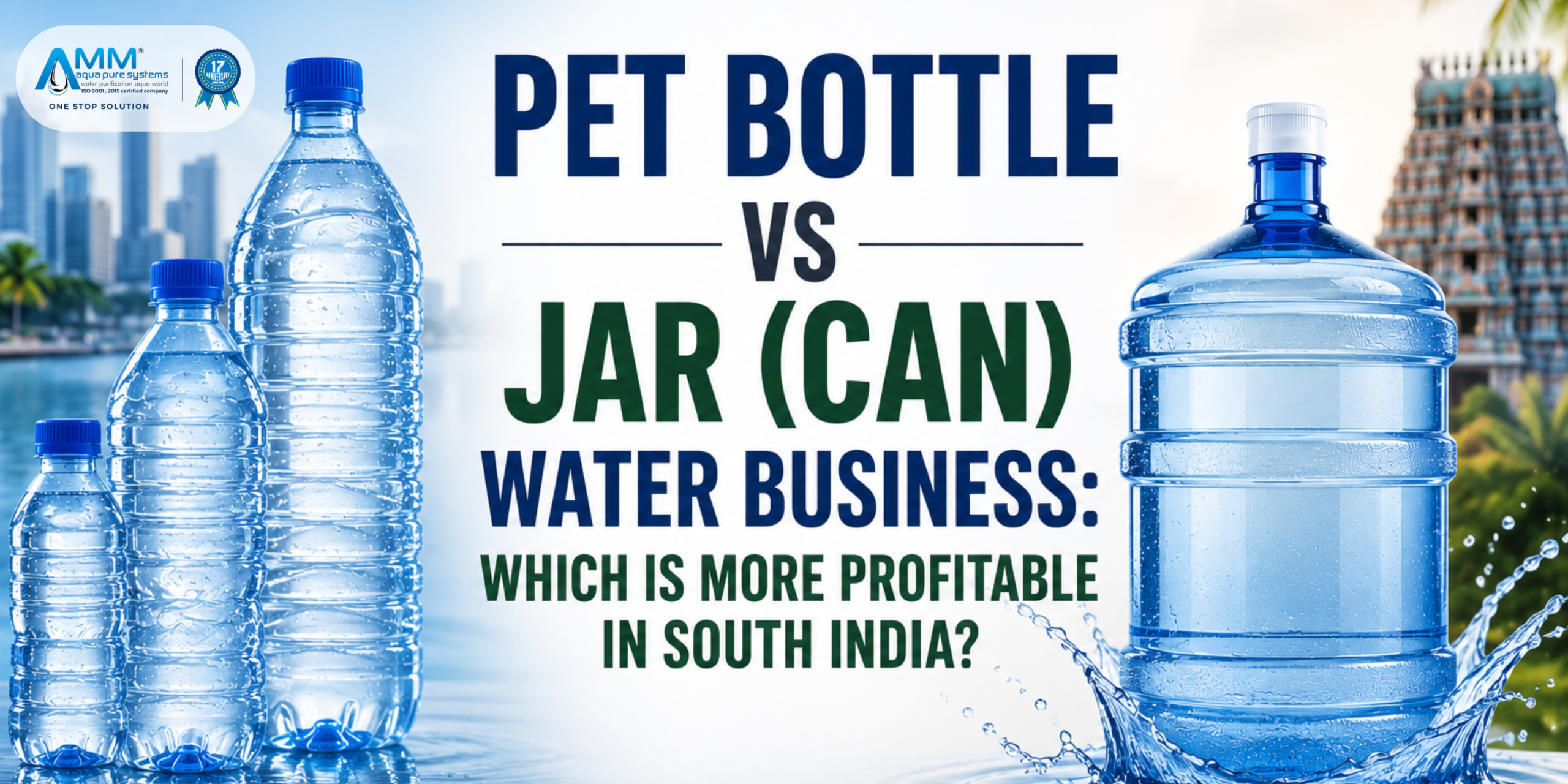
However, one common question remains: Which is more profitable, PET bottle water business or the jar (can) water business? Understanding the differences in investment, operating costs, profit margins, and market demand is essential before making a business decision.
This guide provides a detailed comparison of PET bottle vs jar water business profitability in South India, helping entrepreneurs choose the right model based on their budget, target market, and growth objectives.
Understanding the Two Business Models
Both PET bottle and jar water businesses involve purifying water and supplying it to consumers. However, they differ significantly in packaging, distribution methods, customer segments, and operational requirements.
i) PET Bottle Water Business
The PET bottled water business caters to a wide consumer market by offering packaged drinking water in multiple sizes, including 200 ml, 250 ml, 500 ml, 1 litre, and 2 litre bottles. This business model primarily serves retail outlets, supermarkets, hotels, restaurants, educational institutions, transportation hubs, and event venues where convenient, single-use drinking water solutions are in high demand.
To establish a successful PET bottled water production unit, businesses typically require a
- Complete water treatment plant,
- PET bottle blowing machine,
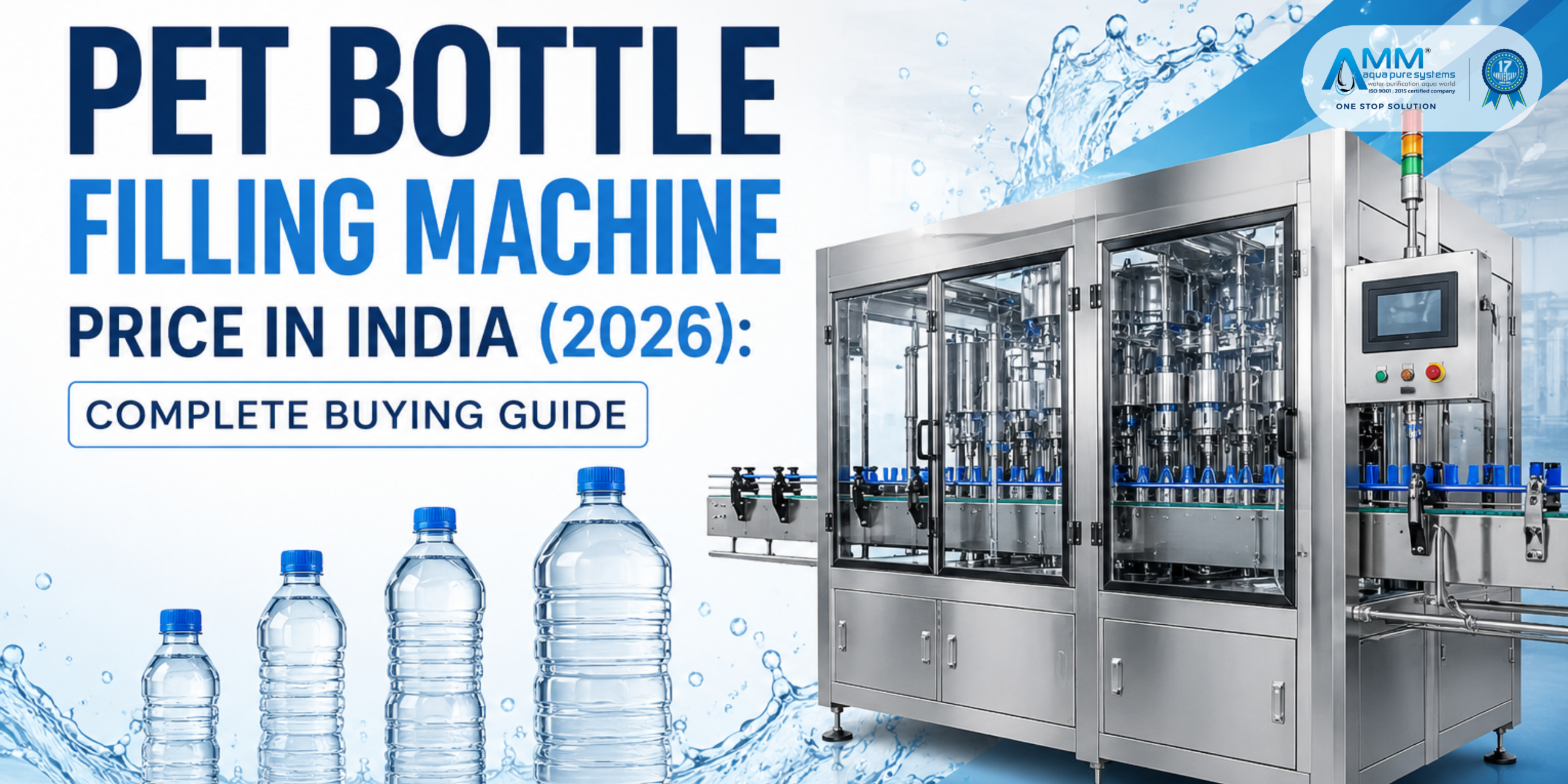
- Bottle rinsing and filling machine,
- Capping system,
- Labeling machine,
- Shrink-wrapping equipment.
As one of the fastest-growing segments in the bottled water business in South India, this model offers strong opportunities for brand development, large-scale distribution, and market expansion.
ii) Jar (Can) Water Business
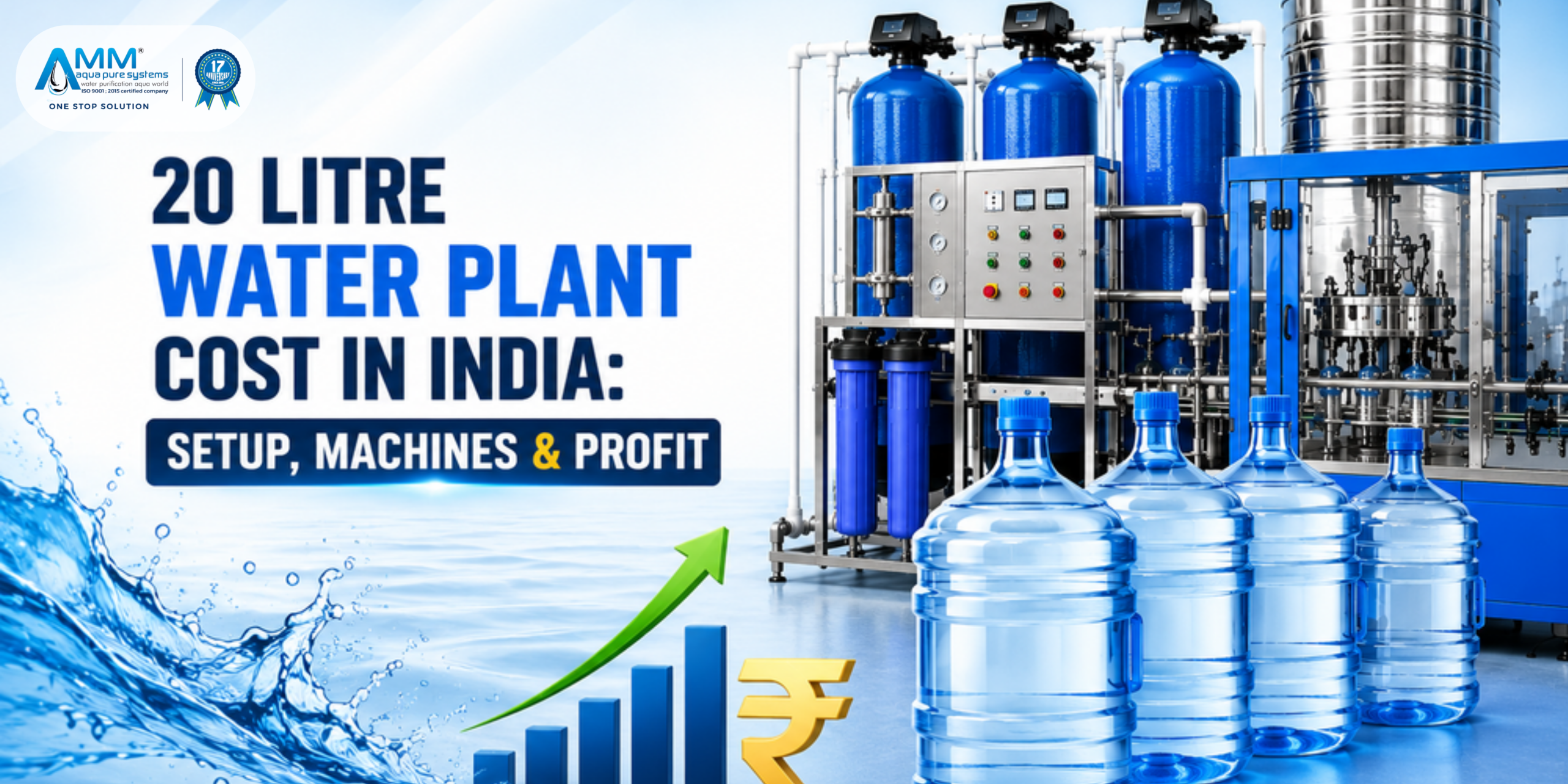
The jar (can) water business focuses on supplying purified drinking water in reusable 20-litre jars and 5-gallon water cans. This segment serves a consistent customer base comprising residential homes, apartments, corporate offices, hospitals, factories, schools, and commercial establishments that require regular bulk water deliveries.
- A standard setup for a jar water plant includes an
- RO water treatment system,
- Jar washing and filling machine,
- Cap sealing unit,
- Delivery vehicles
Due to its recurring refill model and lower packaging costs, the 20 litre jar water business profit potential remains attractive for entrepreneurs seeking a cost-effective and sustainable packaged drinking water business with strong local market demand.
Since jars are reusable, this business model operates on recurring refill orders and long-term customer relationships.
PET Bottle vs Jar Water Business Profitability in South India
When comparing PET bottle vs jar water business profitability in South India, several factors must be evaluated beyond initial investment.
i) Investment Requirements
One of the biggest deciding factors for entrepreneurs is startup capital.
| Factor | PET Bottle Business | Jar Water Business |
| Machinery Cost | Higher | Moderate |
| Packaging Investment | High | Low |
| Storage Requirement | Larger | Moderate |
| Working Capital | High | Medium |
| Distribution Network | Extensive | Localized |
The PET bottle manufacturing plant cost is typically higher because it requires bottle production, labeling, packaging, and larger inventory management. In contrast, the water jar business investment is relatively lower because the same jars can be reused repeatedly, reducing packaging expenses.
For first-time entrepreneurs, jar water businesses often offer a more affordable entry point into the packaged drinking water industry.
PET Bottle Water Business Profit Margin
The PET bottle water business profit margin is primarily influenced by production capacity, packaging costs, market penetration, and distribution efficiency. Businesses that establish a strong retail presence and reliable distribution network often achieve higher sales volumes and long-term growth.
Revenue Opportunities in PET Bottled Water Business
A PET bottled water plant can generate revenue through multiple sales channels, including:
- Retail outlets and supermarkets
- Wholesale distribution networks
- Hotels and restaurants
- Corporate events and functions
- Educational institutions and commercial establishments
Diversifying sales channels helps improve revenue stability and market reach.
Key Operating Expenses
The major costs involved in PET bottled water production include:
- PET preforms and bottle manufacturing
- Caps and labeling materials
- Shrink wrapping and packaging supplies
- Transportation and logistics
- Electricity consumption
- Workforce and operational labor
Since every bottle requires new packaging materials, packaging expenses form a significant portion of the overall operating cost. However, businesses that invest in efficient production systems and strong brand positioning can benefit from large-scale sales and improved profitability.
Benefits of Starting a PET Bottle Water Business
- Excellent brand visibility and recognition
- Access to broader retail and commercial markets
- High-volume production and sales potential
- Greater opportunities for regional and national expansion
- Suitable for supermarkets, hospitality, and travel sectors
Challenges to Consider
- Higher packaging and material costs
- Competitive market environment
- Increased working capital requirements
- Complex inventory and distribution management
For entrepreneurs aiming to build a scalable brand, PET bottling remains one of the most promising segments within the packaged drinking water industry.
20 Litre Jar Water Business Profit
The 20 litre jar water business profit model is built around recurring customer demand, refill services, and reusable containers. This makes it a popular choice among entrepreneurs seeking consistent monthly revenue and faster returns on investment.
Revenue Opportunities in Jar Water Business
Jar water suppliers typically earn revenue through:
- Residential water subscriptions
- Corporate and office supply contracts
- Apartment and gated community deliveries
- Commercial refill services
- New jar sales and deposits
Because customers require regular refills, this business model often benefits from predictable and recurring cash flow.
Major Operating Expenses
Key operational costs include:
- Jar washing and sanitization processes
- Delivery and transportation logistics
- Fuel and vehicle operating expenses
- Employee salaries and delivery staff wages
- Jar maintenance and replacement costs
Unlike single-use PET bottles, water jars are reused multiple times, helping businesses significantly reduce packaging expenses and improve overall margins.
Advantages of the Jar Water Business
- Lower operating and packaging costs
- Consistent monthly refill revenue
- Strong customer retention rates
- Lower startup investment requirements
- High demand from residential and commercial users
Operational Challenges
- Efficient delivery route management
- Vehicle maintenance and fuel costs
- Jar tracking and inventory control
- Timely refill scheduling and customer service
Due to lower recurring packaging expenses and a subscription-based revenue model, the water can supply business profit is often higher on a per-customer basis, particularly in densely populated urban areas across South India.
Which Business Has Higher Demand in South India?
South India offers strong opportunities for both models, but demand varies by customer segment.
Demand for PET Bottled Water in South India
The demand for PET bottled water continues to grow across major metropolitan cities and emerging commercial hubs in South India. Cities such as Chennai, Bengaluru, Hyderabad, Kochi, Coimbatore, and Madurai witness significant consumption of packaged drinking water due to increasing tourism, urbanization, and business activities.
Several sectors contribute to the rising demand for bottled water, including:
- Tourism and travel destinations
- Corporate meetings and business events
- Hotels and hospitality establishments
- Restaurants and food service outlets
- Airports and transportation terminals
- Railway stations and transit hubs
- Educational and recreational events
As South India’s tourism and hospitality industries expand, the bottled water business in South India continues to present strong growth opportunities for entrepreneurs and manufacturers. The increasing preference for hygienically packaged drinking water further strengthens market demand throughout the year.
Demand for Jar Water in South India
The 20-litre jar water segment remains one of the most stable and recurring revenue-generating sectors within the packaged drinking water industry. Demand is consistently driven by customers who require a reliable daily supply of purified drinking water. Key consumers of jar water include:
- Residential apartments and gated communities
- IT parks and corporate offices
- Schools, colleges, and educational institutions
- Hospitals and healthcare facilities
- Factories and manufacturing units
- Government and commercial offices
One of the biggest advantages of the water can supply business profit model is its subscription-based nature. Since households and businesses regularly order refills, entrepreneurs can benefit from predictable monthly revenue, stronger customer retention, and long-term business sustainability.
This makes jar water distribution a preferred choice for investors seeking steady cash flow and lower customer acquisition costs in South India.
Packaged Drinking Water Business Cost Comparison
Understanding the overall packaged drinking water business cost is essential before investing. PET bottling plants require additional equipment for:
- Bottle manufacturing
- Labeling
- Packaging
- Inventory handling
Jar plants, on the other hand, focus more on:
- Water purification
- Jar cleaning
- Filling operations
- Delivery logistics
Both models require a high-quality mineral water plant setup cost allocation for water treatment systems, BIS compliance, and quality testing. The choice depends largely on available capital and long-term business goals.
Scalability and Growth Potential
PET Bottle Business
If your goal is to build a recognized regional or national brand, PET bottling offers superior scalability. Modern automatic bottling plant India solutions enable businesses to increase production efficiently while maintaining product consistency and hygiene standards. PET bottling is ideal for:
- Brand development
- Multi-city expansion
- Large distribution networks
- Retail chain partnerships
Jar Water Business
Jar businesses are best suited for:
- City-based operations
- Hyperlocal distribution
- Subscription-based revenue
- Steady cash flow
Although expansion is possible, growth typically depends on logistics and delivery capabilities.
Common Mistakes New Entrepreneurs Should Avoid
Many entrepreneurs enter the industry without fully understanding operational requirements. Common mistakes include:
- Underestimating distribution costs
- Ignoring preventive equipment maintenance
- Selecting machinery without future expansion planning
- Neglecting BIS certification requirements
- Choosing low-quality water treatment systems
- Overlooking local market demand analysis
Evaluating both investment and operational efficiency is crucial before selecting a business model.
Which Business Is More Profitable in South India?
The answer depends on your business objectives.
Choose Jar Water Business If:
- You have a limited startup budget.
- You want faster returns.
- You prefer recurring monthly revenue.
- You are targeting residential and commercial customers.
Choose PET Bottle Business If:
- You want to build a large-scale brand.
- You have higher investment capacity.
- You plan to serve the retail and hospitality sectors.
- You are focused on long-term expansion.
For many entrepreneurs, the most effective strategy is to begin with jar water distribution and gradually expand into PET bottling as the business grows.
How AMM Aqua Pure Systems Helps
Choosing between a PET bottle water plant and a jar water business requires strategic planning, technical expertise, and the right production infrastructure. With extensive industry experience, AMM Aqua Pure Systems delivers complete turnkey packaged drinking water plant solutions customized to your business objectives and investment budget.
We support businesses through:
- End-to-end water treatment and purification solutions
- PET bottle and 20-litre jar filling plant setup
- Machinery installation, testing, and commissioning
- Technical consultation and operational support
From advanced water treatment systems and PET bottling lines to jar washing and filling equipment, our team ensures efficient, reliable, and scalable plant operations. With a strong focus on quality, regulatory compliance, and long-term performance, we help entrepreneurs build a profitable and sustainable packaged drinking water business with confidence.
Final Words
When evaluating PET bottle vs jar water business profitability in South India, both models offer excellent opportunities, but their profitability depends on investment capacity, operational strategy, and target market.
Jar water businesses generally provide lower startup costs, faster ROI, and stronger recurring revenue, making them ideal for small and medium entrepreneurs. PET bottled water businesses require higher investment but offer greater scalability, stronger branding potential, and wider market reach.
Whether you are planning a new drinking water business idea or expanding an existing operation, selecting the right machinery and water treatment infrastructure plays a critical role in long-term success.
Launch your PET bottle or jar water plant with complete turnkey solutions from AMM Aqua Pure Systems. Get expert guidance, reliable equipment, and a customized quotation today.
Frequently Asked Questions
1. Which is more profitable: PET bottle or jar water business?
Jar water businesses typically offer faster ROI and lower operating costs, while PET bottle businesses provide better scalability and branding opportunities.
2. What is the average investment for a jar water business?
The investment varies based on plant capacity, automation level, and distribution infrastructure, but it is generally lower than PET bottling plants.
3. What is the PET bottle water business profit margin?
Profit margins depend on production volume, branding strength, and distribution efficiency, typically benefiting from large-scale operations.
4. Is there strong demand for bottled water in South India?
Yes. Growing tourism, urbanization, hospitality, and commercial activities continue to drive demand across South Indian cities.
5. What equipment is required for a packaged drinking water plant?
A standard setup includes a water treatment plant, filling system, washing unit, packaging equipment, storage infrastructure, and quality testing facilities.