RO Water Treatment Plant Working Process: Step-by-Step Guide for Industrial & Commercial Use
Water quality plays a critical role in industries like packaged drinking water, food processing, pharmaceuticals, and manufacturing. One of the most effective and widely used purification methods today is the Reverse Osmosis (RO) system. But before investing in a system, many buyers ask the same question: how does an RO water treatment plant actually work?
In simple terms, an RO plant removes dissolved salts, impurities, and contaminants from water by forcing it through a semi-permeable membrane under pressure. The result is high-purity water suitable for industrial and commercial applications. Understanding this working process helps businesses choose the right system, avoid costly mistakes, and ensure long-term efficiency.
What is an RO Water Treatment Plant?
A Reverse Osmosis (RO) water treatment plant is a purification system designed to remove dissolved solids (TDS), chemicals, bacteria, and other impurities from water. It is commonly used in industries where water quality must meet strict standards.
Unlike basic filtration systems, RO plants use pressure and advanced membrane technology to separate pure water from contaminants, making them ideal for both small-scale and large industrial operations.
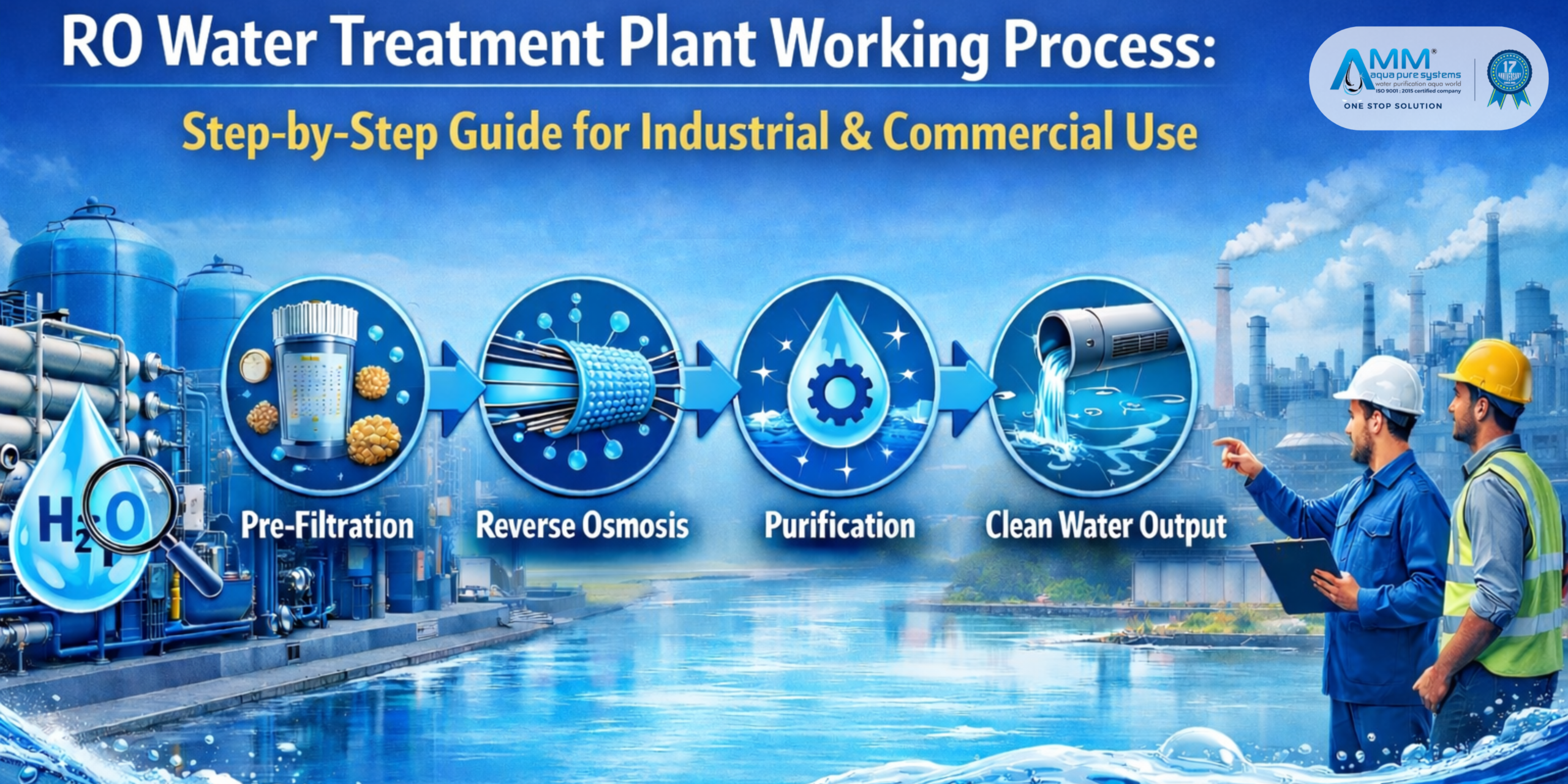
Step-by-Step RO Water Treatment Plant Working Process
1. Raw Water Intake
The process begins with collecting raw water from sources such as borewells, rivers, or municipal supply. This water often contains suspended particles, dissolved salts, and organic impurities that need to be removed.
2. Pre-Treatment Process
Pre-treatment is one of the most important stages, as it protects the RO membrane from damage and improves overall system efficiency.
a. Sand Filter (Multi-Grade Filter)
Removes suspended solids like sand, dust, and larger particles.
b. Activated Carbon Filter
Eliminates chlorine, odor, and organic compounds that can damage the RO membrane.
c. Water Softener (Optional)
Reduces hardness by removing calcium and magnesium, preventing scaling on the membrane.
d. Micron Cartridge Filter
Captures fine particles (typically up to 5 microns), ensuring cleaner water enters the RO system.
3. High-Pressure Pump
Once pre-treatment is complete, water is passed through a high-pressure pump. This pump increases the pressure of the water, which is essential for pushing it through the semi-permeable RO membrane.
The pressure level depends on the water quality and system design but is typically high enough to overcome natural osmotic pressure.
4. RO Membrane Filtration
This is the core of the entire process.
The semi-permeable membrane allows only water molecules to pass through while rejecting dissolved salts, heavy metals, bacteria, and other impurities.
The output is divided into two streams:
- Permeate Water – purified water with low TDS
- Reject Water – concentrated waste containing impurities
This stage removes up to 95–99% of dissolved solids, making it highly effective for industrial use.
5. Post-Treatment Process
After membrane filtration, additional treatments may be applied depending on the application:
a. UV Sterilization (Optional)
Kills bacteria and microorganisms.
b. Ozonation (for drinking water plants)
Ensures disinfection and improves shelf life of bottled water.
c. pH Adjustment
Balances the pH level of water to meet required standards.
6. Storage and Distribution
The purified water is stored in tanks and then distributed for use in production, packaging, or other industrial processes.
Proper storage is important to maintain water quality and prevent contamination.
Key Components of an RO Plant
Understanding the major components helps buyers evaluate system quality:
- Raw water pump
- Multi-grade sand filter
- Activated carbon filter
- Water softener (if required)
- Micron cartridge filter
- High-pressure pump
- RO membranes
- Control panel and instrumentation
- Storage tanks
Each component plays a crucial role in ensuring efficient and consistent water purification.
Factors That Affect RO Plant Performance
Not all RO systems perform the same. Several factors influence efficiency and output quality:
1. Input Water Quality
Higher TDS and contamination levels require more robust systems.
2. Membrane Quality
Premium membranes last longer and provide better filtration.
3. Pre-Treatment Efficiency
Poor pre-treatment can damage membranes and reduce lifespan.
4. System Design
Proper design ensures optimal pressure, flow rate, and recovery.
5. Maintenance Practices
Regular cleaning and servicing are essential for long-term performance.
Maintenance and Operation Insights
Many buyers underestimate the importance of maintenance in RO systems. A well-maintained plant performs efficiently and lasts longer.
Routine Maintenance Includes:
- Periodic membrane cleaning (CIP – Clean-In-Place)
- Cartridge filter replacement
- Checking pump pressure and flow rates
- Monitoring TDS levels
- Inspecting valves and pipelines
Membrane Lifespan:
Typically lasts 2–3 years depending on usage and water quality.
AMC (Annual Maintenance Contract):
Opting for an AMC ensures regular servicing, reduces downtime, and protects your investment.
Applications of RO Water Treatment Plants
RO plants are widely used across multiple industries:
- Packaged Drinking Water Plants
- Food & Beverage Manufacturing
- Pharmaceutical Industry
- Hospitals and Healthcare Facilities
- Hotels and Hospitality Sector
- Industrial Process Water Treatment
Each application may require customized system design based on water usage and quality requirements.
Why Understanding the RO Process Matters
For businesses planning to install a water treatment system, knowing how the RO process works offers several advantages:
- Helps in selecting the right system capacity
- Prevents overpaying for unnecessary components
- Improves communication with suppliers
- Ensures better maintenance planning
- Reduces risk of system failure
A transparent understanding of the process leads to smarter investment decisions.
Choose the Right RO Plant Partner
Selecting the right supplier is just as important as understanding the technology. An experienced provider will not only supply equipment but also offer proper system design, installation, and after-sales support.
AMM Aqua specializes in complete RO water treatment solutions, including:
- Custom-designed systems for different industries
- High-quality components and membranes
- Installation and commissioning support
- Reliable AMC and service assistance
Whether you are setting up a new plant or upgrading an existing system, choosing a trusted partner ensures consistent performance and long-term value.
Conclusion
The RO water treatment plant working process may seem complex, but when broken down step by step, it becomes easy to understand. From pre-treatment to membrane filtration and post-treatment, each stage plays a vital role in delivering high-quality purified water.
For industries where water quality cannot be compromised, investing in a well-designed RO system is essential. By understanding the process, components, and maintenance requirements, you can make informed decisions and ensure efficient operation for years to come.